



Overview
Robotic surgery is no longer a rare, futuristic procedure. According to Intuitive, India now has 180+ robotic-assisted surgical systems and 950+ trained robotic surgeons. Yet one of the biggest pain points patients face is discovering that their insurance coverage for robotic surgery comes with conditions and sub-limits.
In this article, we’ll discuss what robotic surgery is, what it costs, and whether it is covered by health insurance.
What is Robotic Surgery?
Robotic surgery, also called robot-assisted surgery, is a type of minimally invasive procedure in which a surgeon uses robotic arms to perform complex operations. The most widely used system is the da Vinci Surgical System.
Think of it this way: Instead of making a large incision to access the surgical site, the surgeon creates small openings through which they insert a camera and precision instruments. The surgeon sits at a nearby console and controls the robotic arms, which translate hand movements into smaller, steadier instrument movements.
Compared to open surgery, robotic-assisted procedures involve less blood loss, lower risk of infection, shorter hospital stays, and faster recovery.
It is commonly used for:
Did You Know?
Is Robotic Surgery Covered by Insurance in India?
Yes, indemnity-based health insurance plans in India are required to cover robotic surgery. Here's the backstory: In 2019, IRDAI issued a circular mandating that all health insurance companies provide coverage for a defined list of modern treatments, including robotic surgery. This was reinforced again through IRDAI's 2024 Master Circular.
So, no insurer can simply reject a robotic surgery claim outright. But here is the part where it gets complicated.
These treatments are mostly available in private hospitals in tier-1 cities. Moreover, "covered" does not mean "fully paid." There are two common scenarios where policyholders get caught off guard:
Disease-Wise Sub-Limit
Some policies apply separate limits for robotic surgery. For example, public-sector insurers and some older plans, like Star Family Health Optima, cap robotic surgery at ₹3 lakh for a ₹10 lakh sum insured and at ₹4 lakh for a ₹15 lakh sum insured. Niva Bupa ReAssure also says modern treatments are covered up to the sum insured, but with a ₹1 lakh sub-limit on a few robotic surgeries. So, “covered” does not always mean the insurer will pay the full bill.
Equivalent Cost or Reasonable Cost Restriction
Some insurers may restrict payment through a “reasonable and customary charge” clause. They will review whether the charges are reasonable compared to the usual cost of the same or similar treatment in that location. If the robotic approach is treated as an optional upgrade rather than medically necessary, the insurer may pay only the amount it considers reasonable for the covered procedure, and you may have to bear the difference.
Plans that cover robotic surgery without sub-limits or restrictions include options like HDFC Ergo Optima Secure, Care Supreme, and Aditya Birla Activ One Max, among others. If robotic surgery is a concern for you, it is worth specifically checking whether it is covered by the policy before buying.
Talk to an expert
today and
find
the right
insurance for you.


Robotic Surgery Cost in India
Robotic surgery usually costs more than open or laparoscopic surgery because of robotic system charges, instruments, and consumables. Costs vary by hospital, city, procedure, room type, and case complexity.
These are indicative estimates from hospitals and clinics, not fixed package rates. Always ask for a written hospital estimate and insurer pre-authorization before admission.
One important nuance: While the upfront cost looks steep, the total cost of care and recovery can be comparable to open surgery once you factor in shorter hospital stays, lower complication rates, and faster return to daily life.
Terms & Conditions for Robotic Surgery Insurance Coverage
Even with IRDAI's mandate in place, your robotic surgery claim can be denied or reduced if you don't meet certain conditions. Here's what to watch out for:
1) Waiting Periods
Health insurance plans come with waiting periods. Only accidents are covered from day one. If the underlying condition requiring surgery is a pre-existing disease or a specific listed illness, a waiting period of 2 to 3 years typically applies.
2) Qualified Surgeon Requirement
The robotic surgery must be prescribed by a qualified medical practitioner and performed at an eligible hospital. Your insurer may ask for proof of the surgeon's training and certification in robotic procedures, especially for systems like the da Vinci. If this isn't documented, the claim can be reduced or denied.
3) Medical Necessity
Insurers look for clinical justification. The robotic approach needs to be medically necessary, not just a preference. Your doctor should clearly document why the robotic method is clinically superior to conventional alternatives in your specific case.
Why Choose Ditto for Health Insurance?
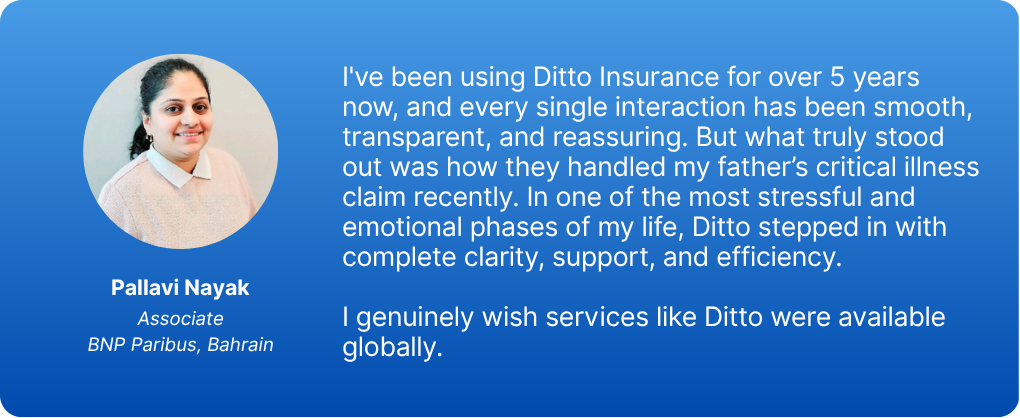
At Ditto, we’ve assisted over 8,00,000 customers with choosing the right insurance policy. Why customers like Pallavi below love us:
- No-Spam & No Salesmen
- Rated 4.9/5 on Google Reviews by 15,000+ happy customers
- Backed by Zerodha
- Dedicated Claim Support Team
- 100% Free Consultation
Confused about the right insurance? Speak to Ditto’s certified advisors for free, unbiased guidance. Book your call or chat on WhatsApp with us now!
Ditto's Take
Robotic surgery coverage on paper and in practice is not the same thing. The IRDAI mandate ensures inclusion, but it doesn't guarantee full payment. Before you assume you're covered, get your policy document reviewed by someone who can read the fine print. That's exactly what Ditto advisors do.
If you're buying a new health plan and want proper robotic surgery coverage, look for policies that cover modern treatments without sub-limits. As a starting point, you can check out our guide on the best health insurance plans in India that cover robotic surgery and modern treatments without any restrictions.
Frequently Asked Questions
Last updated on: