


Overview
A single major hospitalization can cost lakhs, and not every Indian family has private health insurance to fall back on. That's where government health insurance schemes step in, from Ayushman Bharat PM-JAY's ₹5 lakh family cover to CGHS for central government employees and ESIC for organized-sector workers.
But these schemes don't all work the same way. Eligibility, coverage limits, and hospital networks differ sharply from one scheme to another and from state to state.
In this guide, we break down India's major central and state government health insurance schemes, what they cover, who's eligible, and where private health insurance can help fill in the gaps.

Central Government Health Insurance Schemes in India
Ayushman Bharat PM-JAY
Ayushman Bharat PM-JAY offers up to ₹5 lakh annual family cover for secondary and tertiary hospitalization to about 33% of India’s population. It also covers pre-existing diseases from day 1. Under the senior citizen expansion, every Indian citizen aged 70 and above gets an additional ₹5 lakh in annual cover for their household, on top of any existing PM-JAY coverage, regardless of income.
Central Government Health Scheme (CGHS)
CGHS is a healthcare benefit for serving central government employees and pensioners. Unlike retail health insurance, there’s no fixed ₹5 lakh cap. It covers Outpatient Department (OPD) care, medicines, diagnostics, and hospitalization. As of March 2026, CGHS covers around 43 lakh beneficiaries across India.
Employees' State Insurance Scheme (ESIS)
ESIS is a statutory social security scheme for eligible employees earning up to ₹21,000 per month (₹25,000 for persons with disabilities). It provides medical, sickness, maternity, and other social security benefits through ESIS facilities and approved arrangements. As of March 2025, the scheme covers about 14.91 crore beneficiaries.
Niramaya Health Insurance Scheme
Niramaya Health Insurance Scheme is designed for individuals with autism, cerebral palsy, intellectual disability, and multiple disabilities. It offers a ₹1 lakh annual cover, including sub-limits for hospitalization, OPD care, and therapies. Between 2025 and 2026, around 71,537 beneficiaries were enrolled.
Ayushman CAPF (Central Armed Police Forces)
Ayushman CAPF covers Central Armed Police Forces personnel and their dependents. It combines the CGHS and National Health Authority networks to provide cashless hospitalization and OPD services. The scheme currently covers around 41.21 lakh beneficiaries.
Ex-Servicemen Contributory Health Scheme (ECHS)
ECHS provides comprehensive healthcare to ex-servicemen pensioners and eligible dependents through a network of polyclinics and network hospitals, with no fixed treatment cap. As of August 2026, it covers about 66.75 lakh beneficiaries.
PMSBY (Pradhan Mantri Suraksha Bima Yojana)
PMSBY is not a health insurance but a personal accident cover offering ₹2 lakh for accidental death or permanent total disability for ₹20 per year. It’s not a health insurance plan and doesn’t cover hospitalization expenses.
State-Wise Government Health Insurance Schemes in India
Key Insight on State Health Schemes
- Most state schemes work alongside PM-JAY, with the central and state governments sharing the cost. This lets people access cashless treatment and, in many cases, use their benefits even outside their home state.
- PM-JAY focuses on low-income households, while states expand eligibility to broader resident groups.
- Some states offer higher coverage limits. Telangana, for instance, provides up to ₹10 lakh.
- States like Maharashtra and West Bengal expand coverage to wider resident populations.
- West Bengal’s Swasthya Sathi issues health cards in the name of the eldest female member to improve inclusion and access.
For a detailed breakdown of eligibility rules, coverage structures, and claim processes across states, check out our detailed guide on state government health insurance schemes.
Eligibility and Coverage Across Government Health Insurance Schemes
Hospitalization Expenses
Pre- and Post-Hospitalization Expenses
Day Care Procedures
Pre-Existing Diseases
How to Apply for a Government Health Insurance Scheme?
Application processes depend on the scheme type:
- PM-JAY: Eligible families can verify details and generate an Ayushman Card through the official PM-JAY beneficiary portal, mobile app, Common Service Centers, or hospital Arogya Mitra desks. Seniors aged 70 and above can self-register using Aadhaar-based eKYC.
- CGHS and ECHS: Central government employees apply through departmental channels or CGHS portals. Ex-servicemen register online for the ECHS Smart Card using pension PPO records.
- ESIS: Employers register eligible workers on the ESIS portal when they enter insurable employment.
- Niramaya: Applicants register on the National Trust portal using a valid UDID card.
Talk to an expert
today and
find
the right
insurance for you.

Government Health Insurance Schemes: Common Exclusions and Limitations
- Package Limits and Empaneled Networks: Treatment is restricted to specified package rates and empaneled network hospitals.
- Routine Outpatient (OPD) Exclusions: Inpatient-focused schemes like PM-JAY exclude standalone OPD visits and routine diagnostics.
- Strict Sublimits: Schemes like Niramaya limit OPD and therapies within small sublimits.
- General Ward Restrictions: Hospitalization under PM-JAY is limited to general ward beds.
Government Health Insurance Schemes vs. Private Health Insurance: Do You Still Need Cover?
Ditto's Take
Why Choose Ditto for Health Insurance?
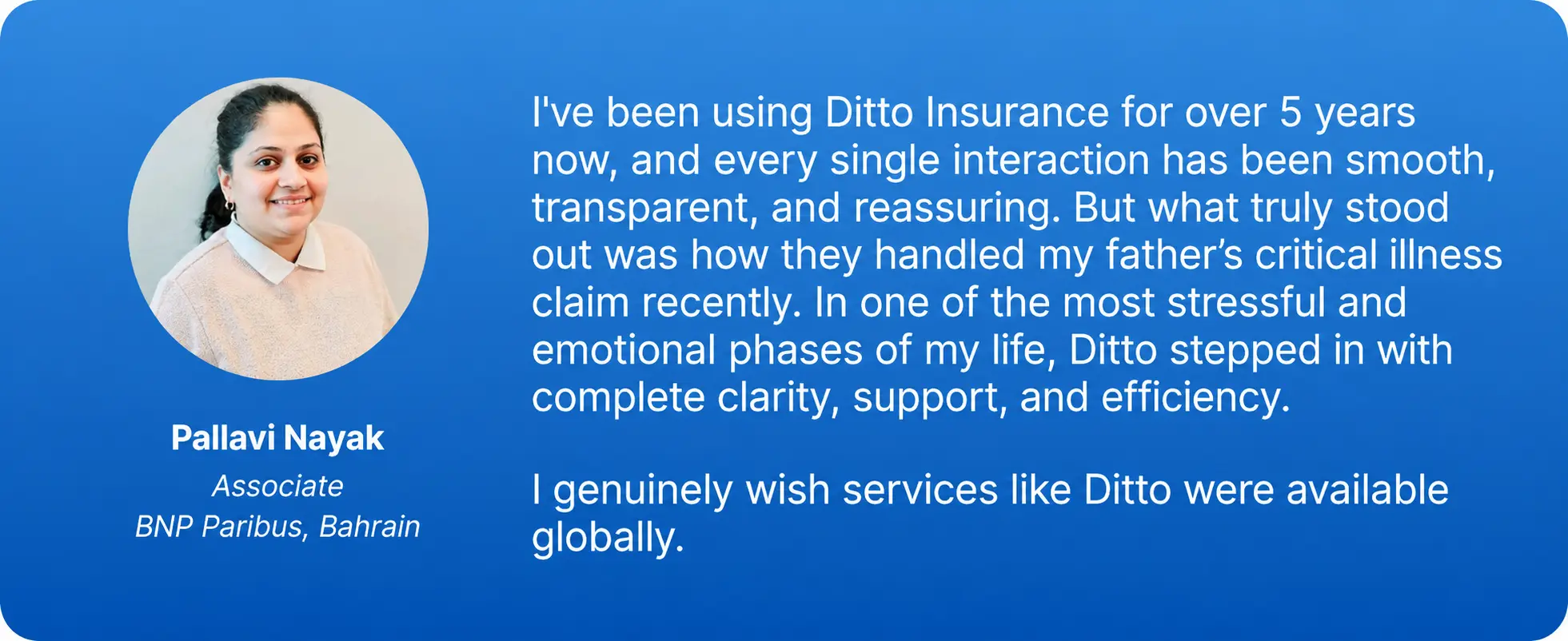
At Ditto, we’ve assisted over 12,00,000 customers with choosing the right insurance policy. Why customers like Pallavi love us:
- 100% Free Consultation
- No Spam. No Sales Pressure.
- Rated 4.9/5 on Google Reviews by 30,000+ Happy Customers
- Backed by Zerodha
- Dedicated Claim Support Team
- Compare Plans and Premiums with a Trusted Insurance Advisor
Confused about the right insurance? Speak to Ditto’s certified advisors for free, unbiased guidance. Book your call now or chat with us on WhatsApp. Slots fill up fast!
Conclusion
Government health schemes like PM-JAY, CGHS, and ESIC do a lot of heavy lifting. They cover pre-existing conditions from day one, need no premium from most beneficiaries, and offer real protection to crores of families who'd otherwise have none.
But they come with real limits: fixed cover amounts up to ₹5 lakh, treatment restricted to empaneled hospitals, and little to no support for outpatient care. With medical inflation running at 12%-14% a year, a single major hospitalization can use up your entire government cover at once.
If you're already covered under a scheme like PM-JAY or CGHS, treat it as your base layer, not your only protection. Check what your scheme doesn't cover, like OPD visits, private rooms, and non-network hospitals, and consider a private health insurance plan to fill those specific gaps rather than replace your existing cover.
Frequently Asked Questions
Last updated on: